
When AI Meets the Courtroom: Building Trustworthy AI Systems Through Legal and Technical Governance
About This Session
As organizations race to embed AI into their products, platforms, and decision-making pipelines, a critical question often goes unanswered until it’s too late: what happens when AI systems fail, produce harmful outputs, or become the subject of litigation?
This session, led by Daniel B. Garrie—co-creator of the JAMS AI Dispute Resolution Rules, JAMS arbitrator, Harvard adjunct professor, and founder of Law & Forensics—bridges the gap between AI engineering and the legal frameworks now shaping how AI is built, deployed, and defended in court. Drawing on 20+ years at the intersection of law and computer science, and hands-on experience as a court-appointed expert in landmark technology cases (including In Re: Facebook), Daniel will walk attendees through the real-world legal risks that product teams, CTOs, and AI engineers face today.
Key takeaways include:
• AI in litigation: How courts are evaluating AI-generated evidence, model outputs, and synthetic media—and the technical standards emerging from these rulings.
• Dispute-ready architecture: Practical engineering decisions (logging, versioning, documentation) that protect AI products when disputes arise.
• The JAMS AI Rules framework: A first look at the dispute resolution rules purpose-built for AI conflicts—covering IP infringement, data privacy breaches, synthetic content misuse, and LLM-related trade secret claims.
• Governance as competitive advantage: How proactive AI governance (cybersecurity audits, compliance frameworks, board-level oversight) reduces risk and accelerates enterprise adoption.
Whether you’re building AI products, leading engineering teams, or advising executive stakeholders, this session delivers the practical legal and technical intelligence you need to ship AI that’s not only powerful—but defensible.
This session, led by Daniel B. Garrie—co-creator of the JAMS AI Dispute Resolution Rules, JAMS arbitrator, Harvard adjunct professor, and founder of Law & Forensics—bridges the gap between AI engineering and the legal frameworks now shaping how AI is built, deployed, and defended in court. Drawing on 20+ years at the intersection of law and computer science, and hands-on experience as a court-appointed expert in landmark technology cases (including In Re: Facebook), Daniel will walk attendees through the real-world legal risks that product teams, CTOs, and AI engineers face today.
Key takeaways include:
• AI in litigation: How courts are evaluating AI-generated evidence, model outputs, and synthetic media—and the technical standards emerging from these rulings.
• Dispute-ready architecture: Practical engineering decisions (logging, versioning, documentation) that protect AI products when disputes arise.
• The JAMS AI Rules framework: A first look at the dispute resolution rules purpose-built for AI conflicts—covering IP infringement, data privacy breaches, synthetic content misuse, and LLM-related trade secret claims.
• Governance as competitive advantage: How proactive AI governance (cybersecurity audits, compliance frameworks, board-level oversight) reduces risk and accelerates enterprise adoption.
Whether you’re building AI products, leading engineering teams, or advising executive stakeholders, this session delivers the practical legal and technical intelligence you need to ship AI that’s not only powerful—but defensible.
Speaker
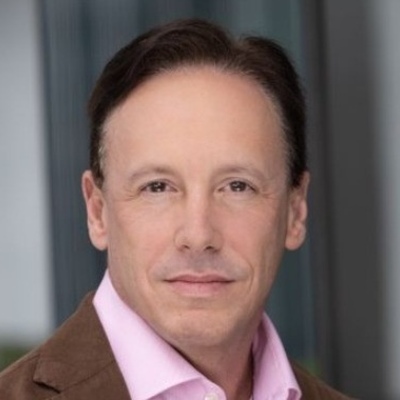
David Cass
CISO - Keyrock
David Cass is Chief Information Security Officer (CISO) at Keyrock. He is also a Senior Partner at Law and Forensics, which enables him to assist various organizations with their security, regulatory, and privacy challenges.
He previously served as a lead regulator for the Federal Reserve Bank of New York where he was a member of the Large Institution Supervision Committee (LISCC). Prior to this appointment, he was the CISO & Global Partner of IBM’s Cloud Security Service Unit where he was responsible for its security practices, processes, and policies. Prior to IBM, he served as SVP & CISO for Elsevier.
David has an MSE from the University of Pennsylvania, and an MBA from MIT. He also is an editorial board member for The Journal of Law & Cyber Warfare and serves as a board member for the UCLA Extension Silicon Beach Innovation Lab. He is a faculty member for the non-profit Global Cyber Institute, and an adjunct faculty member for Harvard and at the Rutgers Law School. He is a member of the New York City Cyber Critical Services & Infrastructure team organized by the NYPD and the office of the NY District Attorney.
He previously served as a lead regulator for the Federal Reserve Bank of New York where he was a member of the Large Institution Supervision Committee (LISCC). Prior to this appointment, he was the CISO & Global Partner of IBM’s Cloud Security Service Unit where he was responsible for its security practices, processes, and policies. Prior to IBM, he served as SVP & CISO for Elsevier.
David has an MSE from the University of Pennsylvania, and an MBA from MIT. He also is an editorial board member for The Journal of Law & Cyber Warfare and serves as a board member for the UCLA Extension Silicon Beach Innovation Lab. He is a faculty member for the non-profit Global Cyber Institute, and an adjunct faculty member for Harvard and at the Rutgers Law School. He is a member of the New York City Cyber Critical Services & Infrastructure team organized by the NYPD and the office of the NY District Attorney.